

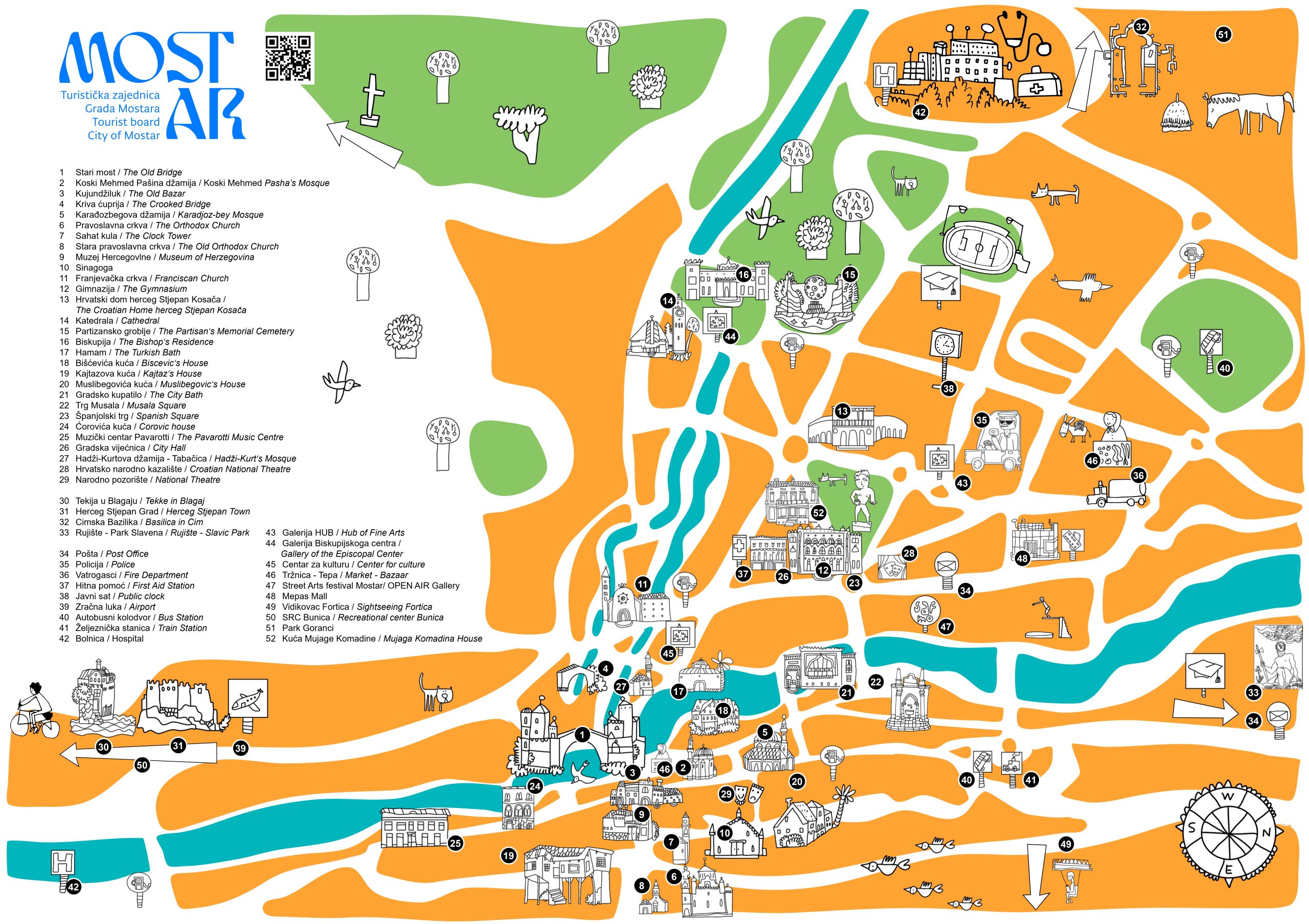
Map of Mostar
The Old Bridge
Old Bridge, It is an example of Balkan Islamic architecture, built in the 19th century. It connects two parts of the city of Mostar across the Neretva River, which is characterized by a length of 30 meters. The bridge was originally built by Sulejman the Magnificent in 1557, and it was made by Mimar Hajrudin. After it was destroyed during the war in 1993, it was restored in 2004, using traditional techniques and materials, in order to reproduce the original appearance as faithfully as possible.
Old Bridge, is an example of Balkan Islamic architecture, built in the 16'" century. Spanning the Neretva River, it connects the two parts of Mostar with a length of 30 meters. The bridge was originally commissioned by Suleiman the Magnificent in 1557 and designed by Mimar Hajrudin. After being destroyed during the war in 1993, it was restored in 2004 using traditional techniques and materials to faithfully reproduce the original appearance.
Koski Mehmed Pasha Mosque / Koski Mehmed Pasha Mosque
- Koski Mehmed Pasha Mosque, is a significant example of 17th-century Ottoman architecture, located on the banks of the Neretva River. It was built in 1618 by Mehmed Koskija, the chronicler of the Grand Vizier of the Emperor Lala Mehmed Sokolovic. The mosque suffered significant damage during the Bosnian War of 1992-1995 and was restored in the late 1990s. Visitors can enjoy a beautiful view from the minaret overlooking the Old Bridge and the surrounding area.
Koski Mehmed Pasha Mosque, is a significant ex ample of 17th century Ottoman architecture, located on the banks of the Neretva River. It was built in 1618 by Mehmed Koski, the chronicler of the grand vizier Lala Mehmed Sokolovic. The mosque sustained considerable damage during the Bosnian War from 1992 to 1995 and was restored in the late 1990s. Visitors can enjoy the beautiful view from the mina ret, which overlooks the Old Bridge and the surrounding area.
Kujundziluk / The Old Bazaar
Kujundziluk, known as the Old Bazaar, is located in the heart of the Old Town. This cobbled street dates back to the mid-16th century and is one of the oldest areas in Mostar. It is famous for its many workshops and shops where traditional crafts such as coppersmithing and carpet weaving can still be found. This place not only captivates with its architecture, but also with its picturesque cafes and restaurants offering traditional dishes.
Kujundžiluk, known as the Old Bazaar, is located in the heart of the old town. This cobblestoned street dates back to the mid-16th century and is one of the oldest areas in Mostar. It is renowned for its numerous workshops and shops where traditional crafts such as copper work and carpel weaving are still found today. This place not only captivates with its architecture but also with lively cafes and restaurants offering traditional dishes
The Croatian Home herceg Stjepan Kosaca / The Croatian Home herceg Stjepan Kosaca
Croatian Home Herceg Stjepan Kosać, was founded in 1994 as the legal successor of the previous Dama Culture. This institution, located in a building designed by Sarajevo architect Reuf Kadic, began its work in 1959. Kosaca is the central place for cultural events in Mostar, organizing various events such as concerts, theater performances, exhibitions and educational programs. Its imposing architecture and wide range of events make it a key cultural center of the city.
The Croatian Home herceg Stjepan Kosaca, was founded in 1994 as the legal successor to the former House of Culture. Located in a building designed by Sarajevo architect Reuf Kadic and inaugurated in 1959, Kosaca is a central venue for cultural events in Mostar. It hosts a wide array of events including concerts, theater performances, exhibitions, and educational programs. Its imposing architecture and diverse activities make it a key cultural hub for the city.